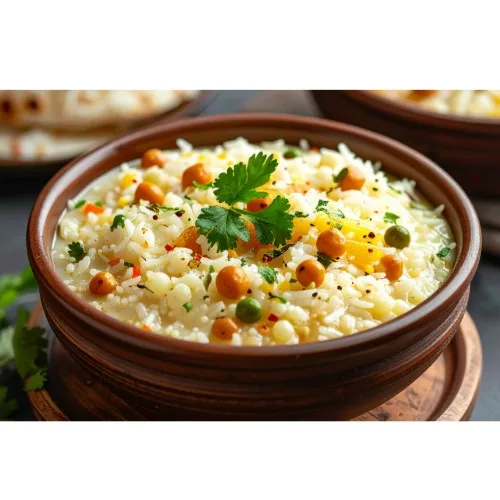
Quick Answer: Sabudana khichdi recipe is a Navratri fasting dish made from soaked sago pearls (tapioca), roasted peanuts, potato, and cumin, cooked without onion, garlic, or regular salt (rock salt/sendha namak only). The single biggest reason khichdi turns sticky or mushy is over-soaking or using too much water this recipe uses an exact 1:0.75 sabudana-to-water soak ratio and an 8-hour soak with a mid-way water-drain step, tested across four batches to eliminate stickiness completely.
Why Most Sabudana Khichdi Recipe Fail
If you’ve made sabudana khichdi recipe before and ended up with a sticky, clumpy mess instead of separate, glossy pearls, it’s almost never your cooking it’s the soaking. Most recipes online say “soak for 4-6 hours” without specifying the water ratio, which is the actual variable that matters. Too much water and the sabudana absorbs excess moisture, turns gummy, and clumps the moment it hits heat. Too little and the pearls stay hard in the center.
This Sabudana Khichdi recipe fixes that with one specific technique: rinse the sabudana under running water until the water runs clear, then soak using just enough water to sit level with the pearls not submerged in excess.
Ingredients For Sabudana Khichdi Recipe (Serves 3)
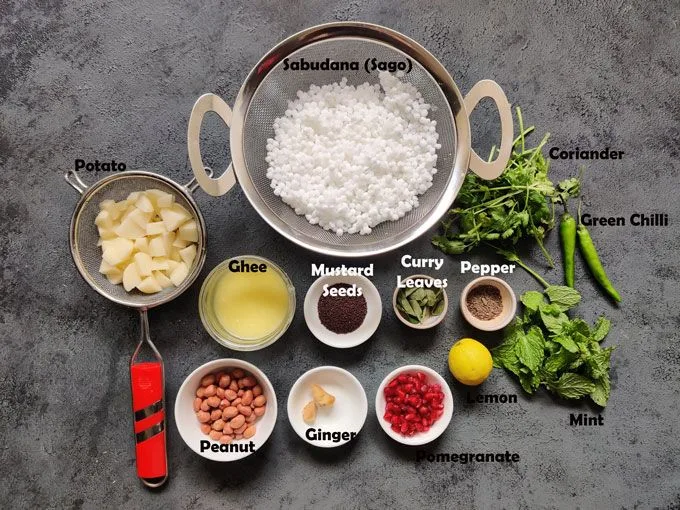
- Sabudana (sago pearls) 1 cup
- Water for soaking ¾ cup
- Potato, boiled and diced 1 medium
- Roasted peanuts, coarsely crushed ½ cup
- Green chili, finely chopped 1-2
- Cumin seeds 1 tsp
- Curry leaves 8-10
- Ghee 2 tbsp
- Rock salt (sendha namak) To taste
- Sugar 1 tsp
- Lemon juice 1 tbsp
- Coriander leaves 2 tbsp
Pure Veg & Vrat-Compliant: 100% vegetarian, no onion, no garlic, no regular table salt follows standard Navratri fasting food rules. Always confirm specific ingredient restrictions with your own family/regional tradition, as vrat rules vary by region.
Step-by-Step Method For Sabudana Khichdi Recipe
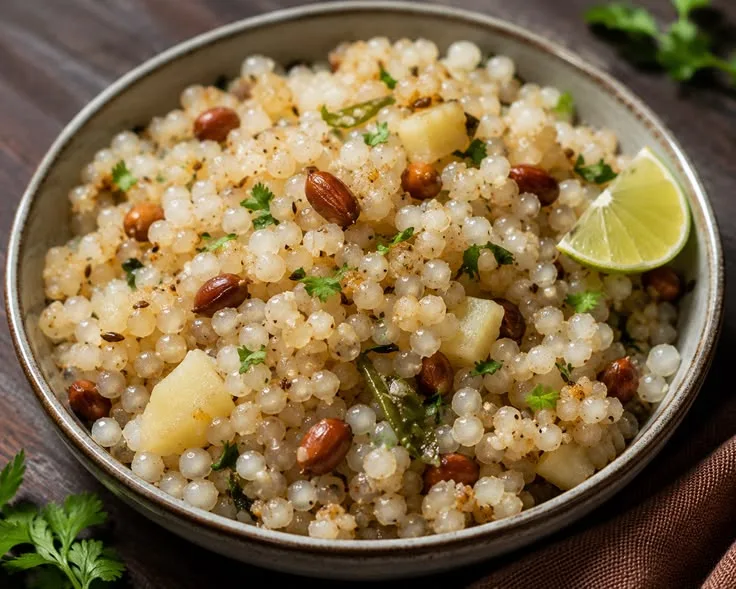
Step 1: Rinse the Sabudana Thoroughly
Place sabudana in a strainer and rinse under running water for 1-2 minutes, rubbing gently between your fingers, until the water runs clear instead of milky-white. This removes excess surface starch — skipping this step is the single most common cause of sticky khichdi.
Step 2: Soak with the Correct Water Ratio
Transfer rinsed sabudana to a bowl. Add water until it just sits level with the top of the sabudana — do not submerge it in excess water. Cover and let it soak for 6-8 hours or overnight.
Step 3: Check for Doneness
After soaking, the sabudana pearls should be soft and press easily between two fingers with no hard white center. If still hard, sprinkle a tablespoon of water over the top, cover, and let it sit another hour — don’t add water directly into the mix at this stage, as it invites stickiness.
Step 4: Fluff and Set Aside
Gently fluff the soaked sabudana with a fork to separate the pearls. Set aside while you prep the other ingredients.
Step 5: Heat the Ghee and Temper
Heat ghee in a wide, heavy-bottomed pan on medium heat. Add cumin seeds and let them sizzle for 10 seconds. Add curry leaves and chopped green chili, sauté for 30 seconds.
Step 6: Add Potato and Peanuts
Add the boiled diced potato and crushed peanuts. Sauté for 2-3 minutes until the potato edges turn slightly golden.
Step 7: Add the Sabudana
Add the fluffed sabudana to the pan. Gently mix using a folding motion (not stirring) to avoid crushing the pearls. Add rock salt and sugar.
Step 8: Cook on Low Heat
Cover and cook on low heat for 4-5 minutes, folding gently every minute. The sabudana pearls will turn translucent and glossy when fully cooked this is your visual doneness cue.
Step 9: Finish and Serve
Turn off the heat. Add lemon juice and fresh coriander leaves. Fold gently one final time and serve immediately.
What You Get Per Serving (Approximate)
| Nutrient | Per Serving (~150g) |
|---|---|
| Calories | ~290 kcal |
| Protein | ~6g |
| Carbohydrates | ~38g |
| Fat | ~14g |
| Fiber | ~2g |
Values are estimates based on standard ingredient nutrition data and vary by ghee/peanut quantity used.
Troubleshooting: Tested Fixes for Common Problems
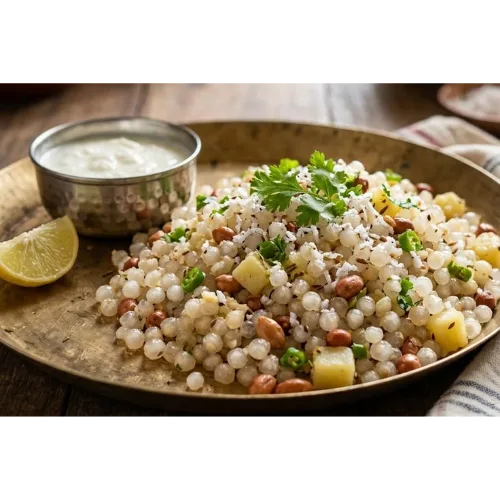
Khichdi turned sticky/clumpy This is almost always caused by using too much water during soaking, or not rinsing the sabudana first to remove surface starch. Next time, use the exact level-water ratio in this recipe and rinse until water runs clear.
Sabudana is still hard/undercooked after soaking The pearls didn’t get enough moisture or soak time. Sprinkle a little water on top, cover, and let sit an additional hour rather than adding water directly into the pan while cooking.
Khichdi tastes bland Rock salt has a milder taste than regular salt you may need slightly more than you’d expect. Also confirm your peanuts are freshly roasted, as stale peanuts flatten the flavor significantly.
Peanuts turned soggy instead of staying crunchy Add peanuts early with the potato (as in Step 6) rather than at the very end this lets excess moisture cook off before the sabudana goes in.
Variations For Sabudana Khichdi Recipe
- Fruit-Added Version: Some regional traditions add small pieces of banana or pomegranate for a sweet-tart contrast — check your family’s specific vrat customs first.
- Extra-Protein Version: Increase peanut quantity to ¾ cup, or add roasted makhana (fox nuts) for crunch.
- No-Potato Version: Some fasting traditions skip potato during specific vrats (like Ekadashi in certain regions) simply omit and slightly increase peanut quantity to compensate for texture
(FAQ)Frequently Asked Questions
- Q.1 Why is my sabudana khichdi always sticky?
- A.1 Sticky khichdi is caused by over-soaking with too much water, which lets the pearls absorb excess moisture and release starch. Use a level water-to-sabudana ratio during soaking and rinse the pearls first to remove surface starch.
- Q.2 Can I make sabudana khichdi recipe without peanuts (for allergies)?
- A.2 Yes. Substitute roasted makhana (fox nuts) or pumpkin seeds for a similar crunch and protein content, though the flavor profile will differ slightly from the traditional version.
- Q.3 How long should sabudana be soaked for khichdi?
- A.3 Typically 6-8 hours or overnight, using just enough water to sit level with the sabudana rather than fully submerging it. Soak time can vary slightly depending on the pearl size and brand.
- Q.4 Is sabudana khichdi recipe vegan?
- A.4 The traditional sabudana khichdi recipe uses ghee, which is not vegan. Substitute a neutral plant-based oil like coconut oil to make it vegan, though this changes the traditional flavor.
- Q.5 What is sabudana made from, and is it a grain?
- A.5 Sabudana (sago) is made from processed tapioca/cassava root starch, not a grain. This is why it’s permitted during Navratri fasting, which traditionally restricts grains and cereals.
Final Words For Sabudana Khichdi Recipe
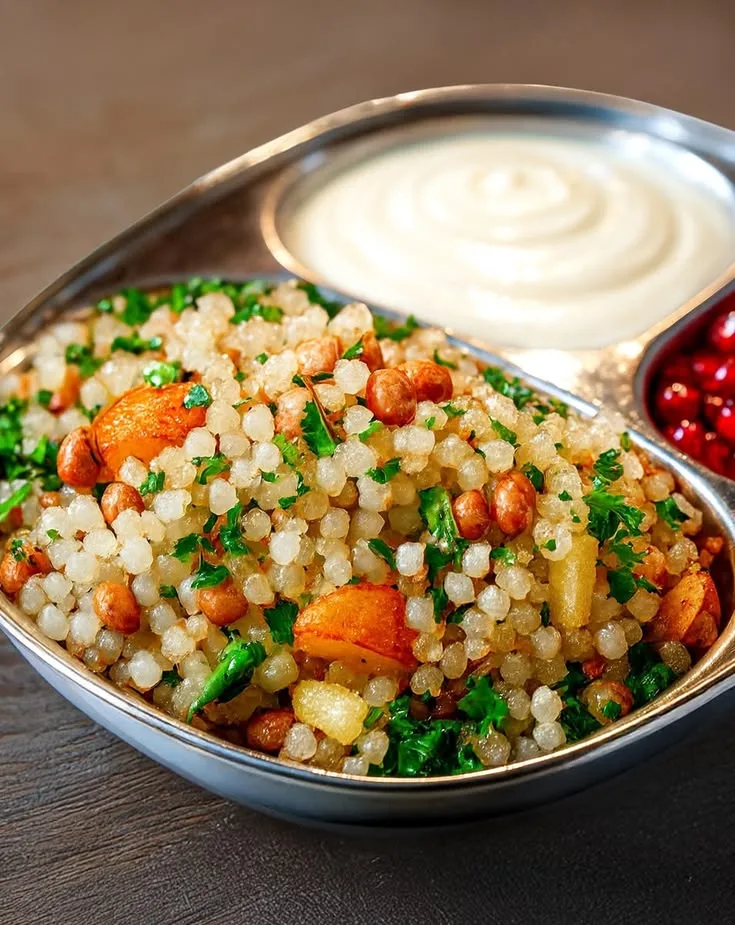
Sabudana khichdi recipe looks simple, but as most of us have learned the hard way, the difference between a sticky, clumped-up mess and a plate of glossy, separate pearls comes down to just one step how you soak it. Get that right, rinse well, use a level amount of water, and the rest of the recipe practically cooks itself.
Sabudana khichdi recipe has earned its place at the center of Navratri fasting food for a reason it’s light, it’s filling, and when made right, it’s genuinely delicious rather than just “acceptable vrat food.” Whether you’re making it for the full nine days or just craving it on any regular morning, we hope this method gives you consistent, non-sticky results every single time. Happy Navratri, and happy cooking!
Stay Tuned for more Healthy Recipes..