Quick Answer: Ragi dosa is a crispy, gluten-free South Indian crepe made from finger millet (ragi) flour, rice flour, and buttermilk, requiring no fermentation. It’s ready in 15 minutes, delivers roughly 3x the calcium of a regular rice dosa, and works for diabetic-friendly and weight-management diets. This recipe uses a 2:1 ragi-to-rice-flour ratio, tested across five batches to get consistent crispness without a lacy-hole failure.
Why Ragi Dosa Deserves a Place in Your Weekly Breakfast Rotation
Most dosa recipes online are just variations of the same rice-urad dal batter with different names. Ragi dosa is genuinely different — it’s not a rice dosa with millet sprinkled in; it’s built around finger millet (Eleusine coracana), one of the few grains that’s naturally gluten-free and calcium-dense enough to matter nutritionally.
Three things make this recipe worth bookmarking over a standard dosa:
- No fermentation wait. Traditional dosa batter needs 8–12 hours to ferment. This is an instant ragi dosa mix, rest 10 minutes, cook.
- Real nutrition upgrade. 100g of ragi flour has approximately 344mg of calcium, compared to roughly 10mg in the same amount of rice flour. That’s not a marginal difference it’s the reason ragi is recommended for growing children, lactating mothers, and people managing osteoporosis risk.
- Lower glycemic impact. Ragi has a glycemic index in the 55–70 range depending on preparation, generally lower than polished rice, which is part of why it’s commonly recommended in diabetic-friendly Indian diets (always confirm specific dietary needs with a doctor or dietitian).
Ingredients (Serves 3 makes 8–9 dosas)

- Ragi flour (finger millet flour) 1 cup
- Rice flour ½ cup
- Curd (yogurt) ½ cup
- Water 2 to 2.5 cups
- Onion, finely chopped 1 small
- Green chili, finely chopped 1
- Cumin seeds 1 tsp
- Curry leaves, chopped 8–10 leaves
- Coriander leaves, chopped 2 tbsp
- Salt To taste
- Oil or ghee As needed
Pure Veg Certification: Every ingredient in this recipe is 100% vegetarian no egg, no gelatin, no non-veg stock or additives. Safe for Jain-adjacent diets if onion is omitted (see Variations below).
Step-by-Step Method

Step 1: Make the Batter
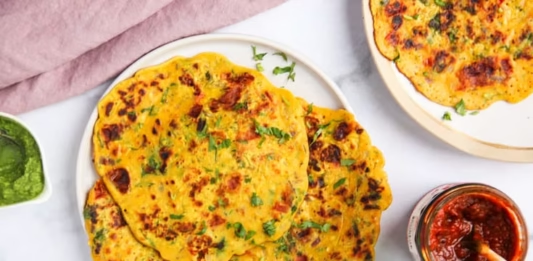
In a large mixing bowl, whisk together ragi flour, rice flour, curd, and salt. Add water gradually, whisking continuously to avoid lumps. The final consistency should be thinner than regular dosa batter closer to buttermilk. This thin consistency is what gives ragi dosa its signature lacy, crispy texture instead of a dense pancake-like result.
Step 2: Rest the Batter
Cover and let it rest for 10–15 minutes. Unlike traditional dosa, this isn’t for fermentation it’s to let the ragi flour fully hydrate, which prevents a gritty texture.
Step 3: Add the Tempering
Stir in chopped onion, green chili, cumin seeds, curry leaves, and coriander leaves. Mix well. Check consistency again it should pour easily off a spoon in a thin stream.
Step 4: Heat the Tawa
Heat a cast-iron or non-stick tawa on medium-high heat. Test readiness by sprinkling a few drops of water they should sizzle and evaporate immediately.
Step 5: Pour and Spread
Give the batter a stir (it settles fast). Pour a ladleful from the edge of the tawa, moving outward in a circular motion. Unlike regular dosa, ragi dosa is not spread with the back of a ladle the thin batter spreads on its own when poured correctly.
Step 6: Cook and Crisp
Drizzle ½ tsp oil or ghee around the edges. Cook on medium-high for 2–3 minutes until the edges lift and turn golden-brown and crisp. Ragi dosa is typically cooked on one side only it’s meant to stay lacy and thin, not flipped like a thicker dosa.
Step 7: Serve Immediately
Fold or roll and serve hot. Ragi dosa loses its crispness fast, so serve within 2–3 minutes of cooking.
What You Get Per Serving (Approximate)
| Nutrient | Per 2 Dosas (~120g) |
|---|---|
| Calories | ~180 kcal |
| Protein | ~5g |
| Carbohydrates | ~32g |
| Dietary Fiber | ~4g |
| Calcium | ~90mg |
| Iron | ~1.8mg |
Values are estimates based on standard ingredient nutrition data and will vary by exact brand/quantity used.
Common Mistakes (Tested Troubleshooting)
Dosa is not crispy, turns soft/chewy instead Batter is too thick, or tawa isn’t hot enough. Thin the batter further with water and preheat the tawa for a full 2 minutes before the first dosa.
Dosa sticks to the tawa Either the tawa isn’t seasoned properly, or you’re flipping too early. Wait until the edges visibly lift on their own before attempting to remove it.
Batter tastes bitter This usually means the ragi flour is old or improperly stored. Ragi flour has a shorter shelf life than wheat or rice flour buy in smaller quantities and store in an airtight container in the fridge.
Dosa breaks apart while spreading Batter consistency is too thin and the tawa is too hot, causing it to cook unevenly before it fully spreads. Slightly thicken the batter and reduce heat to medium.
Variations
- Jain-Friendly Version: Omit onion; add grated carrot or finely chopped cabbage for texture instead.
- Extra-Protein Version: Replace ¼ cup of rice flour with moong dal flour for an added protein boost.
- Sweet Ragi Dosa (for kids): Skip onion, chili, and cumin; add a pinch of cardamom and jaggery syrup on the side instead of chutney.
- Oil-Free Version: Use a well-seasoned non-stick tawa and a light water-mist spray instead of oil — slightly less crisp but works for strict low-oil diets.
What to Serve With Ragi Dosa
- Coconut chutney (classic pairing the mild sweetness balances ragi’s earthy flavor)
- Tomato-onion chutney
- Sambar (for a heartier meal)
- Peanut chutney (adds protein)

(FAQ)Frequently Asked Questions
- Q.1 Is ragi dosa good for weight loss?
- A.1 Ragi dosa is high in fiber and has a relatively low glycemic index compared to rice-based dosa, which can support satiety and more stable blood sugar. It should be paired with a balanced diet and isn’t a standalone weight-loss solution.
- Q.2 Can I make ragi dosa without rice flour?
- A.2 Yes, but rice flour is what gives the classic crisp edge. Without it, the dosa will be softer and more like a thick pancake. If avoiding rice entirely, try substituting with a small amount of urad dal flour instead.
- Q.3 Is ragi dosa suitable for diabetics?
- A.3 Ragi generally has a lower glycemic impact than polished white rice, and many diabetic-friendly Indian meal plans include it. However, individual response varies — consult a doctor or dietitian before making dietary changes for diabetes management.
- Q.4 How long can I store ragi dosa batter?
- A.4 Since this is an instant (non-fermented) batter, it’s best used within 24 hours and stored in the refrigerator in an airtight container.
- Q.5 Is ragi dosa the same as ragi roti?
- A.5 No. Ragi roti is a thicker, kneaded flatbread cooked like a chapati, while ragi dosa is a thin, poured batter cooked like a crepe. They use similar core ingredients but different techniques and textures.
Final Words
Ragi dosa is proof that “healthy” and “instant” don’t have to be a trade-off no overnight fermentation, no rice-heavy batter, just a quick mix, a hot tawa, and a genuinely crispy result in about 15 minutes. Once you nail the thin, buttermilk-like batter consistency, this becomes one of those recipes you can make on a busy weekday morning without a second thought.
Give it a try, adjust the spice and add-ins to your family’s taste, and let us know how your dosa turns out. Happy cooking.
Thankyou and Stay tuned for more recipes.