Gajar ka halwa recipe turns watery when sugar is added before the milk has mostly evaporated, because sugar pulls extra moisture out of the carrots and loosens the mixture. The halwai-style fix is to cook the carrots and full-fat milk slowly until the liquid is nearly gone, then add sugar, then add khoya, and finally roast everything in ghee until glossy and the ghee begins to separate. This gajar ka halwa recipe takes about 70-80 minutes on low-to-medium heat and serves 8.
Why Halwai Gajar Ka Halwa Recipe Tastes Different From Home Versions
Most home cooks follow the same steps as a sweet shop and still end up with halwa that is looser, paler, or less rich. The gap usually comes down to one thing: how well moisture is controlled.
Carrots are mostly water. When you grate them, you break open their cells, and that water starts escaping the moment heat is applied. Then you add milk (more water), then sugar. Sugar attracts water, so when it dissolves into the pan it draws still more liquid out of the carrots, which is why the mixture suddenly looks wet again right after you add sugar, even though it looked nearly dry a minute earlier. This is normal, but it means you have to cook that moisture off a second time.
Halwais manage this on purpose. They use a wide, heavy pan so moisture evaporates quickly, they reduce the milk first, and they finish with a long, patient roasting in ghee. That last step is where the deeper, slightly caramelized, nutty flavor develops. Rushing it, or cooking in a narrow pot with a lid on, traps steam and keeps the halwa wet.
Ingredients For Gajar Ka Halwa Recipe (Serves 8)
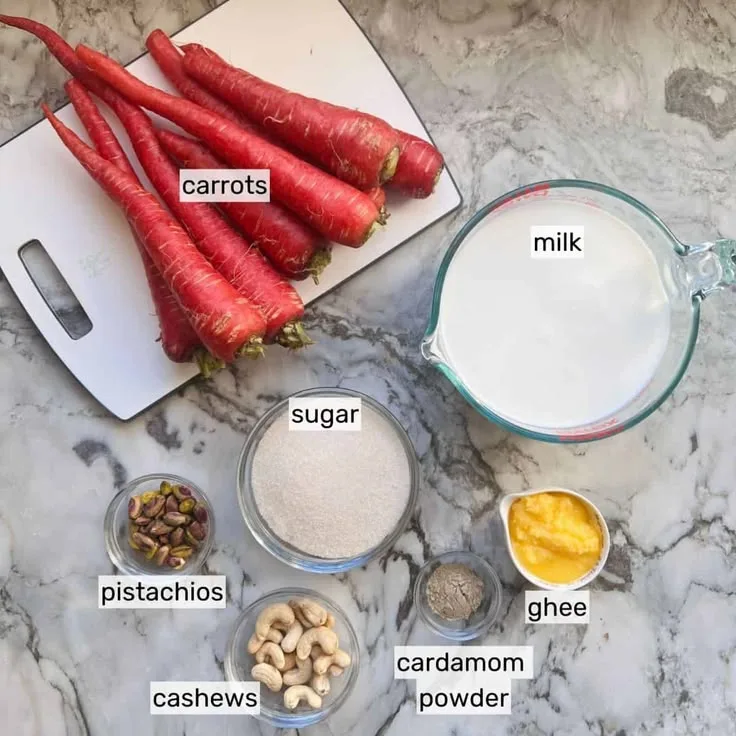
- Red (Delhi) carrots, coarsely grated – 1 kg
- Full Fat Milk – 1 litre
- Ghee – 4 tbsp (plus 1 tbsp extra for the final roast)
- Sugar – 150 g (about ¾ cup), adjust to carrot sweetness
- Khoya (mawa) grated – 200 g
- Cardamom powder – 1 tsp
- Cashews, chopped – 2 tbsp
- Almonds, chopped – 2 tbsp
- Pistachios, slivered (garnish) – 1 tbsp
Pure Veg: All ingredients are 100% vegetarian. Khoya is made only from reduced milk.
Carrot tip: Juicy red winter carrots (gajar) give the best color and natural sweetness. Orange carrots work but may need slightly more sugar and a little longer cooking.
Step-by-Step Method For Gajar Ka Halwa Recipe
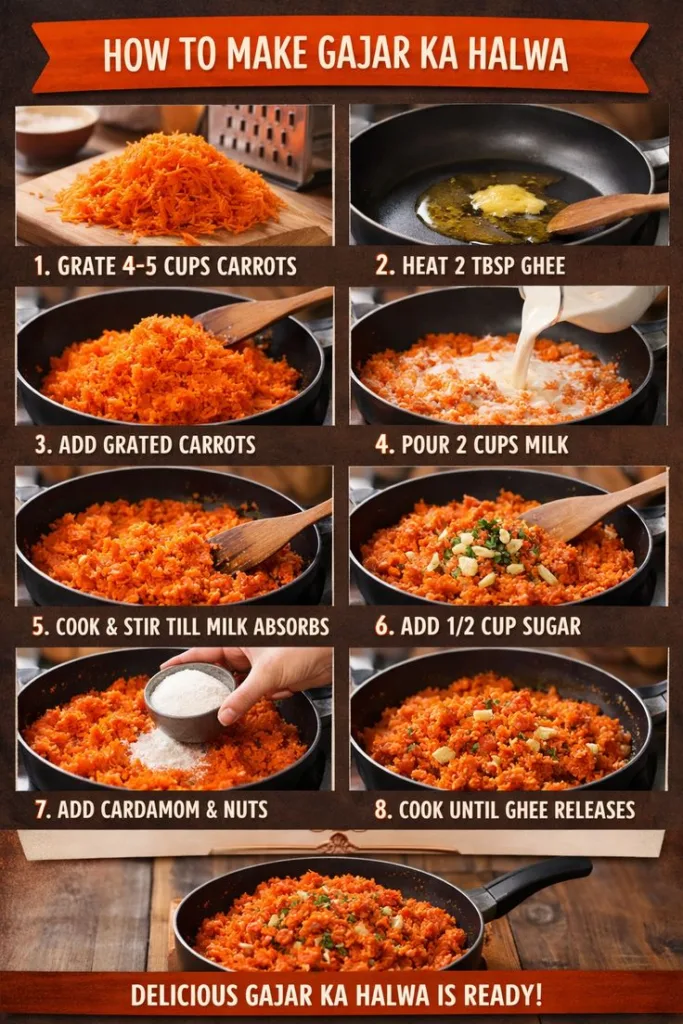
Step 1: Grate Coarsely
Wash, peel, and grate the carrots using the thick side of the grater. Fine grating breaks cells more and makes the halwa mushy and wetter.
Step 2: Saute the Carrots in Ghee
Heat 4 tbsp ghee in a wide, heavy-bottomed kadai on medium heat. Add the carrots and sauté for 8-10 minutes, stirring often, until they soften, darken slightly in color, and the raw smell goes away.
Step 3: Add Milk and Reduce Slowly
Pour in the milk and bring it to a boil, then lower the heat to medium-low. Cook uncovered, stirring regularly, for 30-35 minutes until nearly all the milk has evaporated and the mixture looks thick, not soupy. Do not cover the pan; a lid traps steam.
Step 4: Add Sugar Only Now
Once the mixture is almost dry, stir in the sugar. It will melt and the halwa will loosen. This is expected. Keep cooking on medium heat for 10-15 minutes, stirring, until it thickens again.
Step 5: Add Khoya
Add the grated khoya and mix well. Khoya brings concentrated milk solids, which adds richness and a slightly grainy, authentic texture. Cook for 5-7 minutes.
Step 6: Roast in Ghee Until Glossy
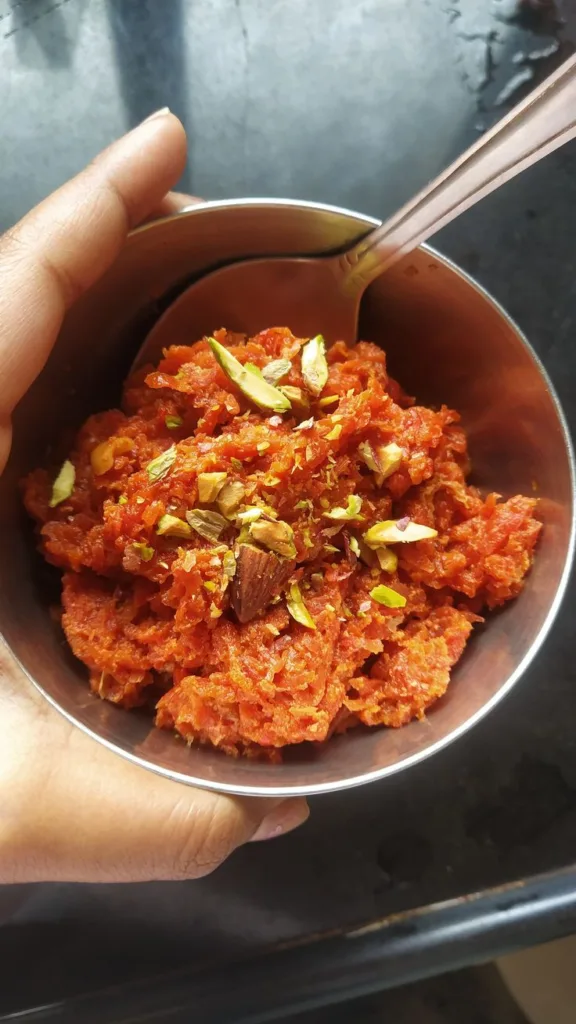
Add the extra 1 tbsp ghee and the cardamom powder. Roast on low-to-medium heat for 8-10 minutes, stirring constantly, until the halwa looks glossy, leaves the sides of the pan, and you see ghee separating at the edges. This final roast is what gives the halwai flavor.
Step 7: Add Nuts and Serve
Fold in cashews, almonds, and raisins. Garnish with pistachios and serve warm. Many people also like it with a small scoop of vanilla ice cream.
Troubleshooting: Why Your Gajar Ka Halwa Recipe Went Wrong
Halwa is watery or loose Sugar was added too early, the milk wasn’t reduced enough, or the pan was covered. Keep cooking uncovered on medium heat, stirring, until the extra liquid evaporates.
Halwa is pale, with no deep flavor The carrots weren’t sautéed long enough, or the final ghee roast was skipped. Roast longer on low heat until the color deepens slightly and ghee separates.
Halwa has a burnt smell or sticks to the pan The heat was too high or the pan was thin. Use a heavy-bottomed kadai and stir frequently, especially after adding milk and sugar.
Halwa is too sweet or not sweet enough Carrot sweetness varies. Start with a little less sugar, taste after the milk reduces, and adjust before adding khoya.
Texture is mushy, not grainy The carrots were grated too finely or cooked on too high heat. Use coarse grating and a gentler flame.
Variations For Gajar Ka Halwa Recipe
Without Khoya: Use 3-4 tbsp milk powder, or reduce the milk longer (about 15-20 extra minutes) for creamy richness.
Quicker Version: Use condensed milk in place of part of the sugar and milk, sautéing the carrots well first. Texture is softer and richer.
Jain-Friendly Note: Traditional gajar halwa is Jain-friendly only if your tradition permits root vegetables; check your own customs.
Vegan Version: Use coconut milk and coconut oil or vegan ghee. Flavor and texture differ from the traditional version.
Storage Tips For Gajar Ka Halwa Recipe
Store cooled halwa in an airtight container in the fridge for up to 4-5 days. Reheat gently in a pan with a spoon of ghee or in short microwave bursts, stirring in between. Halwa can also be frozen for a few weeks; thaw in the fridge before reheating.
FAQ (Frequently Asked Questions)
- Q.1 Why is my gajar halwa watery?
- A.1 Usually because sugar was added before the milk had mostly evaporated, or because the pan was covered. Sugar draws moisture out of carrots, so the halwa needs extra uncovered cooking time after sugar goes in.
- Q.2 Which carrots are best for gajar halwa?
- A.2 Red (Delhi-style) winter carrots are the traditional choice because they’re sweet, juicy, and give a deep color. Orange carrots also work.
- Q.3 Can I make gajar ka halwa recipe without khoya?
- A.3 Yes. Milk powder or longer milk reduction can replace khoya, though the texture will be a little less grainy and rich.
- Q.4 Should I use a pressure cooker for gajar ka halwa recipe?
- A.4 It’s faster, but slow-cooking in an open kadai gives better flavor and texture because moisture evaporates properly and the roasting step develops depth.
- Q.5 How long does gajar halwa last?
- A.5 About 4-5 days in the fridge in an airtight container.
Final Words For Gajar Ka Halwa Recipe
Great gajar ka halwa recipe isn’t about a secret ingredient. It’s about patience and moisture control: sauté well, reduce the milk first, add sugar late, and finish with a slow ghee roast until the kadai edges shine. Do that, and your kitchen will smell like a sweet shop this winter.
Thankyou for reading ❤️ and stay tuned for more amazing recipes.